Showing posts with label diet. Show all posts

10 February, 2014

It's funny how sometimes ideas need time to fully take hold, and turn from concepts into tangible actions.  I've spent countless hours reading about nutrition, and studying what other people do, not to mention the time I've put into experimenting on myself.  I've just recently started to really get things right.

The process

During the twelve week challenge I did last summer I lost a lot of weight and was looking pretty thin by the end of it.  So what was the problem?  Firstly, I became a neurotic fool, thinking about food all the time, counting calories, weighing food, avoiding social situations where I would be "forced" to stray from my path.  Secondly, by the end of it I felt too thin.  In fact, one of my good friends commented on my "Christian Bale look"...sadly, he may have been referring to the Christian Bale from "The Machinist" look.

Lessons Learned

The way I see it, the whole problem with counting calories, and obsessing over details, is that it put me into a mindset of "what can I get away with?"  Knowing that I could eat x-amount of calories led me to try to find creative ways of eating as much as I could without going over my "calorie limit".  Dieting boils down to eating less food. Counting calories  led me to try to eat the maximum amount within the confines of the diet.  These are conflicting thought processes, and it is a recipe for failure.

Feeling too thin, was a good problem for me, but it was a problem nonetheless.  My body changed fast, and my mind was not able to keep up.  I've been a bigger guy my whole life, and suddenly feeling very thin was a strange experience.  After the twelve weeks were over, I gained back a bit of weight, but remained leaner than before the start of the experiment.  I have maintained that size very easily since, and just recently have decided to focus on losing fat again.  I think that this mental aspect of losing weight is often overlooked.  Imagine someone going from obese to lean in a short amount of time.  This is going to require a complete lifestyle overhaul.  Habits will have to change, the way you think about food will have to change, and you will have to get used to looking at a new person in the mirror.  Even if this new person looks good, you still need time to recognize that the new person is you.

What Next

I have gotten used to seeing a thinner Dave in the mirror, and finally feel mentally prepared to see a super lean Dave.  I've also built a decent amount of muscle in the interim, which will hopefully mitigate some of the "scrawny" feelings I had before.

Later this week, I'll post details about what I've come up with to lose weight without spending my free time drooling over low carb dessert recipes...because that is just not cool.


Posted on Monday, February 10, 2014 by Unknown

No comments

28 October, 2013

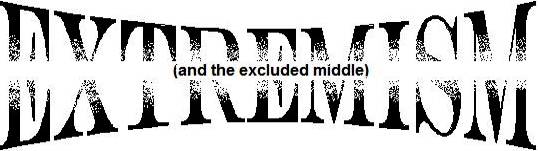
It seems to be a part of human nature to latch onto something you believe in, and reject anything that opposes or doesn't exactly fit with your beliefs.  I know all about it, I'm stubborn as hell. People are so dogmatic about such silly things sometimes. The result of all this stubborn dogmatism is that opinions become polarized, and the middle ground is an incredibly treacherous zone, where people from both sides are firing at will.


There was an article floating around on the internet a few weeks ago about how crossfit can kill you.  There is a medical condition called rhabdomyolysis, that is caused by an excessive breakdown of muscle tissue.  When you exercise you cause micro-damage to muscle fibers, the healing process then rebuilds the muscle, hopefully bigger and stronger than it was previously.  When the muscle is broken down some proteins are released into the blood stream.  If too much muscle damage is caused, too much of this protein (called myoglobin) gets in the blood and screws up the kidneys.  It can be deadly if it is bad enough.  So, can crossfit kill you?  Sure.  If you are insane.

The article told the story of a woman who was hospitalized with rhabdomyolysis after an intense crossfit workout, and it created a huge stir.  Not surprisingly, the two warring factions came out to either support crossfit, or wave the I-told-you-so banners.  No middle ground.


Crossfit is the only way to exercise.  Carbs make you fat.  Fat makes you fat.  Lifting weights is the only way to build muscle.  Bodyweight exercises are the best way to build muscle.  Running will kill you.  Running is the only way to lose fat.  Do a search for anything related to exercise and nutrition.  I guarantee that you will find two groups of people that have their sights trained on the other side and are just waiting to pull the trigger.

Moderation, where are you?  Crossfit is awesome, in moderation.  Carbs are healthy in moderation.  Fats are healthy in moderation.  Incorporate a little bit of each into your life and see if you don't feel better.  I routinely have days where I eat lots of rice, sweet potatoes, and a maybe even some evil-gluten-laden-bakery treats. That's right, gluten- the Antichrist of the nutrition world.  People have really latched onto the "gluten is the root of all evil" way of thinking.  Gluten is bad, if you are gluten intolerant, which very few people are.  That doesn't mean that donuts are good for you, but having a donut once in a while will not turn you into Jabba the Hut overnight.  

I love lifting weights, but I also want to be able to walk on my hands, and do some gymnastics movements, so I throw crossfit style workouts into the mix, and do bodyweight exercises alongside weight training.  Being strong and also able to move athletically sems like a sensible combination. For some reason though, this approach to exercise is considered blasphemous by many people in the exercise world.  Pick a side, and proudly wave the flag.

Critical Thinking

Human beings have brains.  We are able to rationalize, conceptualize, and come to conclusions based on evidence.  Give yourself a pat on the back, you have evolved to think critically. The alternative is to revert back to being a turd chucking chimpanzee, and throw shit-balls at anyone who does not completely agree with your point of view.

Knowing that this polarization of information exists, you have to be able to look at things critically.  Take this "crossfit will kill you" article for instance.  You are probably aware of the fact that exercise is generally considered to be a healthy endeavor.  You know that there are two opposing opinions regarding crossfit (and any type of exercise) as a good way to get healthy and fit.  Finally, you also know that people have a tendency to do things to extremes.  So, what is the actual message contained in the article?  It could be that the author hates crossfit, the woman in the story pushed herself way to hard, and you can do crossfit without ever being hospitalized.

Middle Ground

Please come join me in the middle ground where it is ok to lift weights, do crossfit, jog, do hill sprints, eat paleo, eat carbs, and even (God-forbid) eat a donut or slice of cheesecake from time to time.  Just don't do anything extreme and always think about what you are doing.  Simple concept but surprisingly difficult.  I want to be part of a community of like minded people where dogmatism is trumped by combining the best aspects of many different approaches. Welcome to the middle ground!

Posted on Monday, October 28, 2013 by Unknown

No comments

11 October, 2013

I'm still not sure why, but the post I wrote about being a fat loss scientist continues to be the most popular thing on this blog. It's an idea that I really believe in. Taking control of your own health and fitness, and not relying on other people's experience for everything. It's your body after all.

Experimenting with different foods and ways of eating is fun, and also a great way to find out what makes you feel your best. My latest experiments have included bulletproof coffee, and eating paleo. I hate that name, by the way, so let's just say eating real food.  One was an epic fail, the other a huge success and a big help in reaching my goals.

Bulletproof Coffee

Bulletproof coffee was the fail. There is a good reason why though. When you read about bulletproof coffee, it's presented in a way that claims that the rules of caloric balance don't apply to grass fed butter, and coconut oil. The fact that I bought into this is slightly embarrassing, to say the least. I gained a lot of fat super fast. Something to the tune of 1kg per week.  But here's why. People are losing weight with bulletproof coffee because they are using it as a stepping stone into the world of intermittent fasting. Replacing breakfast with fatty coffee. This lets you consume fewer calories, and more than likely you would be replacing processed carbs (aka healthy breakfast foods) with good healthy fats. That's a perfect switch. In my case though, I went from completely fasting to drinking a 500 calorie cup of coffee. Not such a great trade. The rules of caloric balance apply, the nice new layer of fat on my stomach is proof.

I still think that the concept of replacing breakfast with a cup of fatty coffee is a wonderful idea for the majority of people.  The effect of most breakfast foods on your body is less than desirable, and most people aren't eating enough healthy fat.  But, you have to remember that at the end of the day things need to balance out.

Real Food

Eating real foods, and thinking about the way people ate thousands of years ago has been a great revelation.  This concept gets a big thumbs up in my books.  My take on it differs slightly from the hardcore paleo people though.  There are two major differences.  

The first is this.  Just because a food is "natural" doesn't mean it's natural to eat frequently or in large quantities.  The best example is nuts.  Almonds are healthy, and natural.  But, when in history have people been able to go out and buy large bags of pre-shelled roasted almonds?  If you had to shell them yourself, you'd eat three, give up, kill a bear, and chow down.  Killing a bear would probably be easier than cracking those damn things open. Being so easy to eat makes them incredibly easy to overeat.  I will have some now and then, but view them more as a treat.  A delicious, addictive treat.

The second difference has to do with realistically looking at my goals.  I want to look amazing, and be as strong as humanly possible.  Paleolithic people didn't care about squatting heavy weight and having low body fat. I care about these things.  So, I make exceptions.  After I lift heavy weights I eat lots of carbs.  These carbs could be from sweet potatoes, jasmine rice, or even evil-gluten-laden-bread from time to time.  These are not "paleo foods", but I don't have "paleo goals". It makes sense to me.


I think that experimenting with food choices, and even dabbling with "fads" like bulletproof coffee is great fun.  I learn more and more each time I try something new.  The funny thing is, the more I figure out, arguably the hard way, the more I realize that eating meat and vegetables, and throwing in some carbs after heavy weight lifting sessions, is what makes me feel the best.  There is nothing fancy or cutting edge about this.  Don't buy into the idea of super foods, or fast fat loss diets.  Just eat real food, and be healthy.  I truly believe that it's better to think of fat loss as a by product of good health.  Eat real foods most of the time, and be conscious about what is truly a healthy food choice.  I assure you that if you eat a bag of 'healthy" almonds every day you will get fat.  In my case it's the cashews I have to watch out for.  I will eat the whole bag.

My challenge for you is to experiment.  Try something, anything really.  Take bread out of your diet and see how you feel.  Or try to eat two cups of leafy greens every day, see if you start poopin like a champ.  Just try something different, and see what it does for YOU.  Let me know what you try, and how it works.


Posted on Friday, October 11, 2013 by Unknown

No comments

17 September, 2013

American science writer Gary Taubes is pissing off a lot of people in the nutrition industry.  He has written a few books, but his two bestsellers Good Calories, Bad Calories and Why We Get Fat have made him given him a nice bit of notoriety   I'd say there are a lot of nutrition professionals that really wish he would just go away.  He has theorized that the entire approach to fat loss and health that nutrition professionals have touted for the past fifty years is completely wrong.  The thing is, he makes a damn good case.  I'm going to write a few blog posts that summarize some of the main points from his books.  I highly recommend his books, and in particular Why We Get Fat.  Good Calories, Bad Calories is a little heady on the science, but Why We Get Fat is really an approachable and enjoyable read.

Just so you know, I am not claiming this to be the new gospel of fat loss and health.  This is just a different theory that seems to me to have some valid points.  There are some things that aren't explained by the standard nutritional norms.  I want to look at these questions from all the different angles. The first point I want to cover is the idea we have that being fat is related to wealth.  Poor people should be thin right?  If there isn't much food, how could you possible get fat?

Taubes has a huge list of examples of groups of people that went from being wealthy (as in abundance of good food) to being dirt poor, and got fat in the process.  Here are some of the examples he gives.

Pima Indians

The Pima are a group of Native Americans living in Southern Arizona.  In 1846 American soldiers travelling through the area wrote about the abundance of food. They had so much food, that they were able to supply the military with provisions during the Mexican-American War.  The soldiers also remarked about the strong physiques, and vibrant health of the people.

Fast forward to the early 1900's and things were quite different.  The US claimed the land that the Pima's lived on, and confined the Pima to reservations to ease tensions between the Natives, and Euroamerican settlers.  They were no longer able to maintain their own food supply, and were forced to begin relying on government rations.  They went from food abundance to severe food scarcity within fifty years.  And guess what happened.  They got super fat.  The years of famine made them obese.  Today the Pima have the highest incidence of Type II diabetes in the world.

Sioux Indians

In the 1920's, economics researchers from the University of Chicago visited a group of Sioux Indians living on the Crow Creek Reservation in South Dakota.  They found that the people were "poor beyond imagination" and that they were living on bread and coffee.  The researchers observed the following about the body composition of the people on the reservation.


                                         Women                  Men               Children                  
Distinctly Fat                     40%                   25%                   10%
Extremely Thin                  20%                   25%                   25%

How can there be so many fat people, when they were obviously extremely poor?  The other weird phenomenon is having so many fat people and so many extremely thin people in a community where everyone is living on rations.

Trinidadians

In the 1960's Trinidad was suffering from widespread malnutrition.  The US sent a group of nutritionists to the country in an attempt to help out.  The nutritionists found that even though people were dying from malnutrition and deficiency related diseases, over one-third of women older than twenty five were obese.  Obviously confused by this conflicting scenario, MIT got involved and went down to quantify the diet of these obese women.  The number they got was around 2000 kcal a day, with fat making up around 20% of the diet.  Not the sort of caloric intake that should result in obesity.

Slums of Sao Paulo Brazil

Benjamin Caballero is a public health professor from John Hopkins University.  In 2005 he published an article titled "A Nutrition Paradox - Underweight and Obesity in Developing Countries", in which he describes his findings from a visit to public health clinics in the slums of Sao Paolo Brazil. What he found was that the majority of the families with one overweight family member also had one underweight family member.  They called these families "dual burden families".  From a public health perspective, some members of the family need to go on a diet, and some members of the family need to eat more.  This is definitely a paradox.  So, their question was "How can we make more food available to these undernourished children, without making their parents fatter?"

What is Going On Here?

There are many other examples of poverty and obesity coexisting.  In his book, Taubes has a list of about a dozen communities that were studied in an attempt to make sense of this strange phenomenon.  You can probably think of examples of this from your own life.  I used to work at a grocery store, and I clearly remember that the people who looked the poorest, were typically the fattest, and they would come to the checkout with piles of crap food.  The reason being that, unfortunately, junk food is cheaper than healthy nutrient rich food. In Why We Get Fat, the majority of the examples given have one thing in common, the presence of obesity and malnutrition in the same communities, and often in the same families.  It doesn't make much sense.

In Why We Get Fat, Taubes has an interesting point. "The co-existence of thin, stunted children...with mothers who are themselves overweight, doesn't pose a challenge to the public health system, it poses a challenge to our beliefs" he says. Think about this for a second.  Fat mom, skinny little undernourished kid.  Is Mom really taking food away from her own child, so that she can get fatter?  We know enough about maternal instincts to know that this is an impossibility.  So, why are there so many instances of fat parents with malnourished children?

The question I'm stuck with is this.  How is it possible for some people to get fat in the midst of famine and malnutrition?  Is it really as simple as calories in vs calories out?  How big a factor does food type and quality play?  

 Speaking from my own experience, I've found that lately I'm losing fat by eating more calories...a lot more calories.  The key for me has been removing all processed foods, and keeping carbs really low.  The most important thing is that I feel much healthier.  This is exactly the same conclusion that Taubes arrives at through the course of his research.  He does a good job explaining it too.  I am going to share more about  this soon, as well as more about my personal experimentation.  


Posted on Tuesday, September 17, 2013 by Unknown

No comments

02 September, 2013

Leaky gut syndrome.  Sounds gross right? Well it is, but probably not in the way you are thinking. It's leaky gut syndrome, not leaky butt. No poop in this post.

Leaky gut syndrome is a medical condition where undigested bits of food, and toxins are able to pass through the lining of your stomach and intestines and get into your blood. In a healthy gut, there are lots of bacteria that allow us to digest food properly. When there aren't enough of these little guys, food and toxins are able to leak through and get into your blood.  The thing is, almost all of us have this problem to some degree.

What happens when you get the gut leaks? A lot of bad things. Research into this subject is still somewhat new, but it has been suggested that conditions ranging from food allergies and rashes, all the way to autism and ADD/ADHD may be the result of a leaky gut.

Why are our guts so messed up? It pretty much boils down to how badly our food supply has been screwed with, and our over reliance on antibiotics. The bacteria in our guts are the "biotics" that the drugs we take are "anti-ing". Antibiotics work by indiscriminately wiping out all the bacteria in your gut, and in fact it's usually the good bacteria that get killed first. So after taking antibiotics, or eating them from hormone loaded meats, your gut has no protection. Throw some pesticides and herbicides into the mix, and all of a sudden you have a sieve instead of a stomach lining, and a laundry list of toxins having a pool party in your blood.

What can we do? This can be reversed with a sensible diet that is full of good bacteria. You may want to supplement with probiotics too. I've started trying to heal my own gut, after noticing a mild allergy to eggs. Just recently I've been getting groggy after eating eggs, and from everything I've read, it's probably a sign of some gut health issues. I'm taking a probiotic now, eating more fermented foods like kimchi and sauerkraut, and staying away from anything processed. After just over a week with these probiotic foods, my egg issues are gone.


For people interested in learning more, check out Dr. Natasha Campbell-McBride. She runs a clinic set up to treat people with Gut and Psychology syndrome or Gut and Physiology syndrome (both are called GAPs). There are some miraculous stories of people, children in particular, recovering from diseases that would normally have them throwing back bottles of pills to manage their symptoms without treating the causes. The ones that interest me the most are the children recovering from learning disorders, and mental health problems.  The rise of autism over the past thirty years coincides so perfectly with the advice from nutritional agencies to eat low fat, high carb diets that it is hard to believe there is no relationship between the two.  This research into GAPs seems to be hinting at refined carbs as having a direct influence on the rise of mental health disorders. In any case, kids recovering from learning disorders, and mental health problems is something we all want to see more of! The best part is that it is being done with nothing but real food. No doping the kid into la-la-land and sticking him in the corner of the classroom.

This stuff is a little different from what I usually talk about, but it all boils down to eating healthy food.  We don't pay enough attention to the quality of the food we eat, and we are paying the price.  We all remember a handful of classmates who were the "ADD kids". They needed all kinds of special attention, and worst of all, piles of medicine, but never seemed to get any better. What if all they needed was a better diet?

Posted on Monday, September 02, 2013 by Unknown

No comments

29 August, 2013

I'm changing things up again.  By now you must be thinking that I'm the most scatterbrained guy around. That's probably partially true, but I promise I have my reasons for switching things up.  I've come to realize that I made some mistakes with my 12 Week Challenge, and it's time to set things right.

For the past few months I've been working hard to lose fat, in the healthiest way possible. Being healthy has always been a big part of this for me. Lately I've begun to question my approach though. I have focused on restricting calories and exercising as much as my recovery would allow. Is this really the best way?


Something I read the other day made me rethink this whole concept.  If you are thrown off by all the talk of caveman diets, and paleo nutrition, I apologize, but bear with me while I explain my thought process. If one of our caveman ancestors (I like to picture Bam-Bam) was suffering from a lack of food (during the winter, or other times when food was hard to come by) would he be more active or would he be trying to preserve the energy he did have?  By exercising hard on a calorie deficit, this is exactly what we are doing.  There is no way little Bam-Bam would be out running hill sprints unless absolutely necessary.  This is the modern approach to fat loss though.  Reduce calories and exercise more.  How does our body respond to this situation?  Well, first it takes energy away from what it considers to be non-essential, like the reproductive system, and gives that energy to the brain.  No need to be making babies if you don't have enough brain power to maintain sensible thoughts...memories of Saturday night? The second thing the body does is hang on for dear life to the fat stores you do have left. There is a hormone called leptin that takes messages from our fat cells and controls fat storage accordingly.  When body fat gets low, and there isn't much food coming in, leptin freaks out and goes into fat storage mode.  By pushing yourself too hard while not eating enough, your body is going to start making all kinds of hormonal changes that you will not like.

The other problem I've noticed about restricting calories and focusing on macro nutrient targets is that I am becoming food-focused.  Eating should not involve math.  That's the bottom line.  We are supposed to eat healthy, natural foods until we feel satisfied, and then we stop eating.  I haven't gotten to the point of dreaming about cakes and cookies, but I think that I'm wasting a lot of mental energy on diet.  Also, a big part of hormonal health is stress control, and constantly thinking about food can result in a lot of underlying stress that I don't want or need.

You know that I'm always down to try something new and experiment on myself, so that is exactly what is going to happen.  The best part is that I already did a lot of the leg work during the 12 Week Challenge.  I have a pretty good idea about what kinds of food make me feel the best.  When I was doing the high fat/ low carb diet, I was killing it.  I had great energy levels, wasn't a moody jackass, and had the libido of a thirteen year old at the Playboy mansion. So, I'm switching back to that style of eating. No more tracking macros and weighing chicken breasts. I will still pay attention to the carbs that I eat, because they seem to have the biggest impact on fat loss (for me at least), but I am going to eat protein and healthy fats until I feel good and happy.  This may take some fine tuning, but that's part of the process.


Learning about nutrition is silly sometimes, because there are four thousand experts with ten thousand different philosophies.  It gets extra confusing because you can certainly get a great body without being healthy.  There are all kinds of nutritional experts who talk about treating body builders and other physique competitors after their shows.  In a lot of cases these people completely wreck their metabolisms, hormone balances, and develop eating disorders in an attempt to get down to super low bodyfat levels.  I'm not interested in becoming a train wreck with abs.

My thinking, and I may be completely wrong about all this, is that fat loss and muscle gain will happen naturally as a result of the work I do in the gym. I just need to change my focus to being healthy and start really listening to my body.  I will be sure to share everything I find out with you.  If it doesn't work, and I wind up a big fatty, you may not want to copy me on this one.

Posted on Thursday, August 29, 2013 by Unknown

No comments

21 August, 2013

I'm at the gym the other day waiting patiently for the one and only squat rack.  Don't judge, you North Americans, I was lucky enough to find a gym with one good squat rack.  The squat rack at my previous gym was more like something that got ripped out of an elementary school playground sometime in the eighties.  Anyways, I finished up my deadlifts, and was hoping to do some front squats before going home.  This big guy (not good big) had been busting out set after set of squats, and I realized that he was not giving up that squat rack anytime soon.  I conceded, and hopped on the leg press.  I finished my workout, did a little finisher, and was packing up to go when I asked super squats if he was getting tired yet.  He'd done squats non-stop for the forty five minutes that I'd been there, and who knows how long he'd been at it before I got there.  He was starting to look like grossly bloated marathon runner staggering over the finish line.  He replied that he was tired, but still had three hours to go.  

"Wait, what?!  Three more hours?"  I asked. 
"Yeah, I've gotta do four hours everyday.  I'm too fat, and need to lose weight." he said. I started to cry on the inside, but managed to blurt out,
"Don't you have a job?"

Where do these insane ideas come from?  The more I try to learn about fitness and nutrition, the more I'm blown away by the absolutely insane information that is so readily available. 

Have you ever heard of the 80/20 rule?  It states that in any endeavour, 80% of the effects will come from 20% of the causes. Your job is to find out what causes you can focus your attention on to maximize the effects.  For fat loss, what are the different causes you can focus your effort on?  Weight training, cardio, diet, eating so called super foods, praying to the ab gods, etc.  Which one of these will give you 80% of the results?  The answer is diet.  If your diet is spot on, you can lose fat without doing anything else.  To maximize your rate of fat loss from 80% to 90% add some cardio.  To build some muscle, or at the very least prevent muscle loss, train with heavy weights.  

Diet is the cause that will yield 80% of the results.  Once you let this sink in, you can start to take all that misplaced effort and focus it on meeting your dietary targets.  This is why fat loss is so excruciatingly painful sometimes.  We are hard-wired to want to do more, to make things happen faster.  I'm sorry, but it doesn't work like that.  The only thing that you can do more of is eating less, and being more patient.  Four hours of squatting is not going the answer.

Straighten your diet out.  Figure out where your energy is best used, and use it there. I hate spending time on something and getting very little in return, and I know you feel the same way. So, back to super squats.  I told him about my quest to learn as much as possible about fat loss and nutrition, and that I personally have lost around 20 kg in the past three years.  I asked what his diet looked like.  No fried foods he said. If I had asked about his squat program I'm sure I would have gotten a run down of a fancy template designed to increase volume exponentially week by week in order to blah blah blah.....but, for diet the answer was no fried foods.

Please don't misplace your efforts.  Focus on the causes that will give you the most results. 


Posted on Wednesday, August 21, 2013 by Unknown

No comments

05 August, 2013

I have five things that I try to make a part of my daily life. These things keep me on track nutritionally, keep me healthy, keep me fit, and keep me sane. Try to incorporate these five things into your life for unadulterated awesomeness.

Macros- hit em 

Set macro nutrient goals for yourself (help can be found here) and hit those goals. This allows you to figure out what adjustments to make to your diet if you aren't getting the results you want. You've gotta be honest with yourself though. Record what you actually ate, not what you should have eaten.  If you don't have reliable data, you can't make informed decisions when adjusting your diet. Besides, lying to yourself about what you are is worse than cheating at solitaire.

Move - more if you can

Exercising a few times a week is awesome. Props to you if you are already following a sensible weight training program. But, weight training aside, try to move more. I know that a thousand people have already told you to take stairs, and walk to work, and so on, so I won't repeat it. We are a lazy generation that wants to get everything by doing as little as possible. Get out of this mindset. You know you need to be more active. Don't over-think it, just move more.

Mobility- becausing having hips like your grandmother is not cool

I think that in terms of overall health benefits this might be number one. Get a foam roller, buy this book, and learn how to live in that body of yours. We do a world of damage to ourselves by sitting for hours on end in front of computers. Spending thirty minutes doing self-care is not too much to ask. It feels so good to reclaim proper range of motion in your spine, hips, and shoulders. The actual act of doing mobility work is downright horrid sometimes, but the benefit are immediate and carry over into every part of your life.

Meditate- that's right

I thought this was a little too new age and flaky at first too. I was dead wrong. We spend all this time on our bodies, fixated on the outward stuff when inside is a constant torrent of mayhem. Get that mind of yours under control, and I guarantee the benefits will carry over to every aspect of your life. Take five minutes before you sleep to focus on all the high tension areas in your body, and consciously relax them. This will improve your sleep, help you focus, make you happier, allow your body to heal better after intense workouts...the benefits of meditating are endless, so give it a shot.

Sprint - it's probably as close to feeling like a real athlete as you'll ever get

Sprinting will kick your ass. That's pretty much all there is to it. There are a million ways to include sprinting into your life. Don't over-complicate this! Twice a week go outside, warm up properly, and then move fast. You can run shuttle sprints, suicides, hill sprints, 100m, 200m, 400m sprints, sled sprints, even bike sprints on those rainy days. I can't stress enough the need to not over-think this. Playing ultimate frisbee could be your sprinting. Just move fast, rest until you can breathe semi-normally, and then move fast again.

I think that these five things can make an enormous difference to your life.  They will all teach you to take charge of yourself, and will make you stronger in every way possible. What am I missing here?  Let me know in the comments below or on facebook.

Posted on Monday, August 05, 2013 by Unknown

No comments

30 July, 2013

When calories are restricted, you want to make damn sure that anything you eat is going to be filling and also have some nutritional value.  If you are trying to get the majority of your calories from processed foods (including processed "health foods") you are going to be hungry all the time, not to mention severely lacking in micro nutrients and minerals.  This is why making proper food choices is so important.  Feeling hungry on a diet is normal, feeling like you might lose your mind if you don't fire a bag of Doritos down hatch is not.  By eating real, whole foods it is infinitely easier to create a sustainable plan. So, what are some easy foods to add into your diet to feel fuller, and give you the will power to walk past McDonalds on your way home from work.

Broccoli - This should be a staple.  Stir fry it, steam it, eat it raw in salads, whatever you choose, it is super filling and is loaded with fiber and nutrients.  

Leafy Greens - The calories from leafy greens are almost negligible, but they can still be quite filling.  Try throwing a big pile of greens onto your stir fry for the last thirty seconds.  They will wilt into the mix and add a lot of volume to a meal without adding much in the way of calories. Another good option is a mixed green salad with some tomatoes, onions, and apple cider vinegar, or balsamic vinegar as the sauce.


Fruit - Fruit is a great choice when dieting because it's a delicious way to load up on vitamins.  A few generations back, people knew that eating several servings of fruit everyday is a must. I know a lot if people that might not get two servings of fruit in a week. When focusing on losing fat be careful though.  The carbs found in fruit are different from those found in vegetables, and starchy sources.  Our body can only process a certain amount, and going over that amount will result in fat storage.  So limit yourself to two or three servings of fruit to avoid messing up your fat loss plan.

Mushrooms - I have fallen in love with mushrooms, and in particular shiitake mushrooms.  These are high volume foods that take on the flavor of what ever they are cooked with, and they have an incredibly low calorie content considering how filling they are.  I throw them into every stir fry I make.


Salsa- I think I could eat industrial sized jugs of salsa and never get sick of it. The beauty of salsa is that it's packed with flavor, but has very few calories. If I don't have time to cook anything special, I'm more than happy to dump salsa on some chicken and chow down.

What am I missing on this list?  What would be your top 5 add-ins when trying to lose fat?  Leave a comment below and let us in on your advice!

Posted on Tuesday, July 30, 2013 by Unknown

No comments

01 July, 2013

Losing fat, and getting in shape is going to require some will power and determination.  But, it doesn't have to come at the expense of your social life.  I like drinking.  Saturday night drinks have been a part of my life for a long time now, and I don't think that getting in shape should require locking yourself in a room for three months. Sustainability is always the most important part of any fat loss plan.  If you find that your diet is truly a huge struggle to follow faithfully, it probably needs some tweaking.  The plan that I have come up with for myself, is a breeze.  I could keep it up indefinitely and not lose my mind. I have had some great success, not at the expense of my sanity or social life either.

You can't go out and have a two day bender every weekend if you seriously want to lose fat. I'm sorry, but you do need to practice some restraint.  You can however, have a good night of partying once every few weeks, and not hamper your progress too much.  The rules of dieting still apply to alcohol.  Obviously alcohol is not a healthy fuel source, so relying on alcohol for energy is not a practical approach. The principle of controlling calories is still the most important part of burning fat though.  With some simple guidelines, you can go out and have a night of fun here and there, without feeling guilty about it.

Martin Berkhan, the creator of  Leangains Intermittent Fasting, wrote an awesome article about alcohol and fat loss here.  The article is pretty heavy on the science, but it is worth reading for those of you who want to understand more about how our bodies deal with alcohol, and about the myths regarding alcohol that are prevalent in the health and fitness community.  The advice I'm going to share, is based on his work, and on my own personal experience.

How to booze it up, and not get fat.

Total calories.  Burn it into your mind.  This is what matter when losing fat.  Alcohol has 7.1 cal/gram.  This means that an average 1oz shot of alcohol has around 60 to 70 cal.  Depending on how you mix your drinks, this means that 10 drinks will be around 700 cal. or more, depending on what you mix with.  Beer has carbs, so the calories vary from 100 cal to 200 cal per bottle depending on the brand.

If you want to drink, but also want to keep your calories in check, the extra calories from alcohol, need to be compensated for by reducing the calories from food. This is in no way good for your health, but I think we all know that drinking is inherently unhealthy anyway. Keep protein high and replace fat and carb calories with alcohol.

Keep fat low

On days where you want to drink, try to keep fat as low as possible.  Eat lean chicken for your protein, and steer clear of higher fat protein sources like beef, pork, and fish.  The problem with fat and alcohol is that eating an excess of calories almost guarantees that any fat you eat will be stored as fat, and a night of drinking will almost always result in eating more than your maintenance calories.

Carbs

As far as carbs go, you can technically use the carbs from whatever you drink, to replace muscle glycogen. So if you drink after training, higher carb drinks like beer are actually acceptable, remembering to pay attention to total calories of course. 

So here is my advice on how to put "diet-drinking" into action.

 Step 1 

Eat your regular amount of protein (1g/lb of bodyweight). 

 Step 2

 Eat as little fat as possible. Eat a huge pile of fibrous veggies, and leafy greens instead. 

 Step 3 

 Choose beer or liquor. If you trained on the day you plan to drink, beer is ok. 

 Step 4 

 Take a look at the calories from the food you have eaten, and figure out how much you can drink without blowing you calorie limit out of the water. 

 Step 5 

 Calm the hell down, and enjoy life. Assuming that you are being strict with your diet eighty percent of the time, a night out here and there is not going to ruin you. If you follow the advice I've laid out, you will be just fine. In fact, there is a bonus to drinking sometimes. The day after drinking you will have very little water retention, and will look leaner for a few days. So, eat a pile of veggies, your regular protein amount, and have some fun. Also try to remember your goals, and restrain yourself when the McDonald's run happens. Eating five big macs at the end of the night is not going to fit into this plan. Get at it, and enjoy!

Posted on Monday, July 01, 2013 by Unknown

3 comments

31 May, 2013


It's funny how quickly one month can pass by. It really doesn't feel like it's been more than two weeks, but nonetheless here we are a month later.  I'm really happy with the progress I have made in a month.  I've lost 5lbs, and shed over an inch from my waist.  The thing that makes me happiest though, is that my energy levels are still super high, my strength has continued to rise, and in general I feel really good.  This is what makes intermittent fasting so great.  On my rest days I do crave more food, but I never even come close to giving in because I know that a huge meal is only around the corner.  Those training day feasts are the best.  I've switched to from rice to sweet potatoes for my carb source, because sweet potatoes are far more filling, and tastier than rice.  Next week I will record exactly what I'm eating, and post a meal by meal outline to show you what I'm doing.  For now, I hope that you are finding some insightful information here, and want to thank you for all your support both here, and on facebook.  Thanks a ton!

Posted on Friday, May 31, 2013 by Unknown

No comments

29 May, 2013

There is so much information on the web that it is really overwhelming. It's so easy to get caught up second guessing yourself and wondering if what you are doing is truly the best and most efficient way.


Over the last three weeks I have been steadily losing weight, and still gaining strength. Everything is working perfectly, and I should be feeling on top of the world. But, for some reason I began convincing myself yesterday that I need to completely change my diet. I have no idea where this idea came from, but it slowly began to turn into paranoia that I'm going about this all wrong. It undoubtedly came from something I stumbled across on the internet, and slowly turned into unfounded doubt and stupidity.

While walking this morning, I cleared my head and realized that I am an idiot. Why would I ever consider changing what I'm doing, when I have had great success so far?

You really do have to be practical when it comes to this stuff.  Look at the results and the factors creating those results, as I mentioned here. If you are losing weight, or losing inches in the places you want, keep on doing what you're doing.  Block out all the noise telling you that there are other ways that are better or faster.  If what you are doing is working, and fits with your lifestyle, keep doing it!  If you have not made any progress for over two weeks, or are obviously taking steps back, change it up.  But make these changes based on your own results, not on something you read or heard.  There are thousands of ways to lose weight or gain muscle, but you have to choose one, and give it time to work.  So stop reading, and get at it!


What do you do to keep yourself on track when trying to achieve your goals? Leave a comment and let us know!  And be sure to follow my progress here, and on facebook

Posted on Wednesday, May 29, 2013 by Unknown

No comments

26 May, 2013

If you want to make any serious changes to your body you need to approach it scientifically, because really that’s all it is.  If you eat more than you need you will gain weight. If you exercise intelligently this weight will be muscle, if not maybe it will be fat. If you eat less than you need, you will lose weight. You want to lose fat, not muscle. So, you must exercise enough to keep muscle, and eat enough to sustain that muscle.

There isn't much more to it than that. So to go about it scientifically what do you need?  Well, like any good scientist, you need variables, and measurable results.


What are measurable result? A measurable result is an outcome of some change in the variables, that can be accurately measured.  So in the science of weight loss, you have.

1.      The scale. Everybody's favorite tool. It is the worst of the three sources of information. It tells you that you have gained or lost weight, but it cannot tell you if this weight is fat, water, or muscle.

2.      The tape measure. The tape measure is better than the scale, because it shows directly where change is happening, and what kind of change it is.  If your goal is to lose fat you want to see your waist measurements dropping, but may not want to see your arms shrivel up into licorice sticks.

3.      Strength levels. Strength is the best indicator of muscle loss or gain. If you are losing strength you are likely losing muscle. So keep track of how much you are lifting to know if you are gaining or losing muscle.

No strength losses going on here.

There is one more source that does not provide measurable feedback, but is still useful. It is the mirror. The mirror is generally pretty reliable. An even better approach would be to take pictures every week or two. By comparing past and present pictures you will have a clear indication of your progress. Pictures do not lie.
What variables does a fat loss scientist have?

1.      Food intake. You absolutely must keep track of what you eat every day. This is the most basic requirement. Only when you have an established baseline can you begin to adjust your diet. I highly recommend getting the app myfitnesspal. It makes keeping track of your food super easy. If your measurements show that you are gaining weight when you want to lose weight, you need to eat less.  If you want to gain weight, but are not gaining, you need to eat more.

2.      Energy out. Adding morning walks has a huge effect on fat loss because of the extra calories being burned. Keep a record of the exercise you are doing, and adjust it as you need to.  The key to losing weight is to exercise only as much as you can recover from.  This is why walking is so great.  No one gets sore from walking, but it is a great way to burn calories.  If you tried to run, or do bodyweight circuits every morning you would burn more calories. The problem is that you would never recover properly due the low food intake during dieting.  You would not be able to move heavy weights in the gym, and would end up losing muscle. Walking is the best option for burning some extra calories.

Don't get crazy, but keep track of what you eat!
Closely watch all measurable results, and adjust the variables as needed. This is the first step to achieving your goals. Intermittent fasting helps you become more efficient at burning fat, and putting energy into muscle growth. It also makes keeping track of what you eat easier, by putting all your eating into an 8 hour window.  Try it out, and keep me posted!


Posted on Sunday, May 26, 2013 by Unknown

No comments